Cannabis Blood Test and Workplace Safety Guide 2026
If your query is "cannabis blood test", the confusion is often this: you may be asking one legal question, one medical question, and one safety question at the same time.
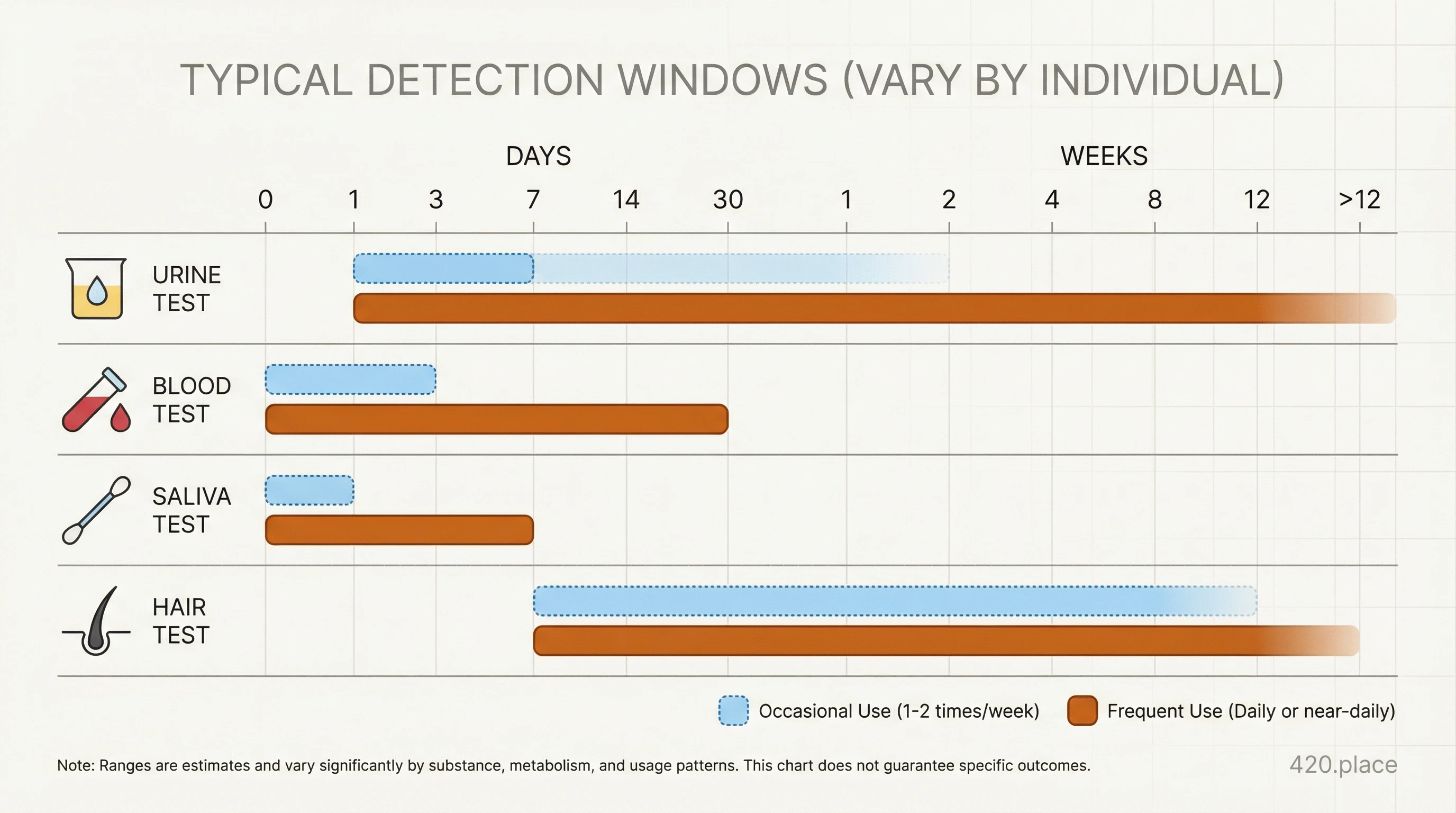
- Can a blood test prove impairment?
- How long can cannabis stay in blood?
- Should a positive test mean automatic workplace discipline?
This guide answers all three in one structure.
The key principle: blood test and impairment are not the same thing
A blood sample is useful for recent use detection and can support legal or safety investigations. But blood THC levels do not map perfectly to cognitive performance the way many people expect. Different people metabolize cannabinoids differently, and impairment depends on dose, route, tolerance, and time since use.
Clinical and toxicology literature consistently shows this mismatch: measurable THC can persist beyond immediate peak effects, while functional risk is usually highest soon after use. That is why a blood result should be interpreted with timing and behavior, not used as a one-line verdict.
What blood testing actually measures
Urine vs blood vs oral fluid
- Blood: best proxy for recent use and pharmacokinetic timing in some legal contexts.
- Urine: measures metabolite residues and is often used for longer detection windows.
- Saliva/oral fluid: easier for roadside-like screening and shorter windows in some protocols.
For workplace decisions, this distinction matters because your next actions should be based on risk and recency, not only on one test class.
How to interpret common workplace questions
"If I test positive, am I automatically impaired?"
Usually no. A positive cannabis blood sample shows cannabinoids in the system, not a complete safety score.
"How long can THC stay detectable in blood?"
In frequent users, blood can show positivity for different durations depending on potency and metabolism. Infrequent users generally clear faster. Heavy use and higher-THC products create wider variability.
"What should I do after a workplace trigger?"
- Preserve context: when you last used, what you used, route, and sleep status. 2. Ask for test method details and reporting threshold. 3. Document symptoms and task risk before changing work assignment. 4. Seek clinician or occupational health follow-up if you have safety-sensitive duties.
Workplace priority checks for safety-sensitive roles
If the role involves driving, heavy machinery, or public protection, use a conservative threshold. The NIOSH guidance on worker safety emphasizes that prevention decisions should be role-based and policy-consistent when impairment risk is present.
For non-safety-sensitive roles, organizations should still use transparent policy language and a documented review process so that testing outcomes are interpreted fairly.
US, Canada, and Germany context
United States
Test policies differ by employer and sector, but interpretation should remain function-based and documented. Blood results are one data point among behavior, timing, and task exposure.
Canada
Canadian guidance generally treats cannabis safety through risk prevention and public-health framing. The practical takeaway is to combine policy compliance with harm-reduction behavior and clinical support in repeated or high-risk use patterns.
Germany
In Germany, medical cannabis access and workplace handling are linked to structured frameworks and medical supervision. Use workplace tests as part of a broader legal, medical, and safety process rather than a single irreversible judgment tool.
Practical 24-hour workflow
- 0-2 hours: avoid safety-sensitive decisions and confirm no co-use (alcohol, sedatives).
- 2-12 hours: monitor symptoms, hydration, sleep context, and reaction speed.
- 12-48 hours: if negative trends continue and role allows, return only when fully alert and medically cleared.
- 48+ hours or persistent symptoms: involve occupational health and document escalation.
FAQ
Can cannabis blood testing prove exact impairment?
No. It supports timeline and exposure assessment; it does not replace behavioral risk assessment.
Can I keep a job after a first positive blood test?
That depends on role risk and workplace policy. In safety-sensitive work, employers typically apply stricter standards, but the strongest decisions use documented context rather than a single test value.
Is oral fluid better than blood for legal cases?
They serve different functions. Oral fluid is often used for shorter-window screening; blood is often requested for additional resolution in some investigations.
What should I do while awaiting a retest or review?
Do not self-disqualify from decisions. Ask for method and timing details, keep a sober self-observation log, and involve a health or occupational professional.
Related reading
Operator review checklist
For "Cannabis Blood Test and Workplace Safety Guide 2026", reconcile each material claim with the page's existing source record:
- confirm the jurisdiction or studied population, effective date, and applicability;
- distinguish direct support from inference or unresolved evidence;
- route legal, medical, medication, impairment, or dosing questions to a qualified reviewer.