Cannabis Gummies for Anxiety 2026: Keep Relief Safe and Predictable
If you use gummies for anxiety, this is about two things: onset timing and dose control. Unlike smoked routes, gummy effects are delayed, variable, and often longer. That is why people feel uncertain and then stack doses too early.
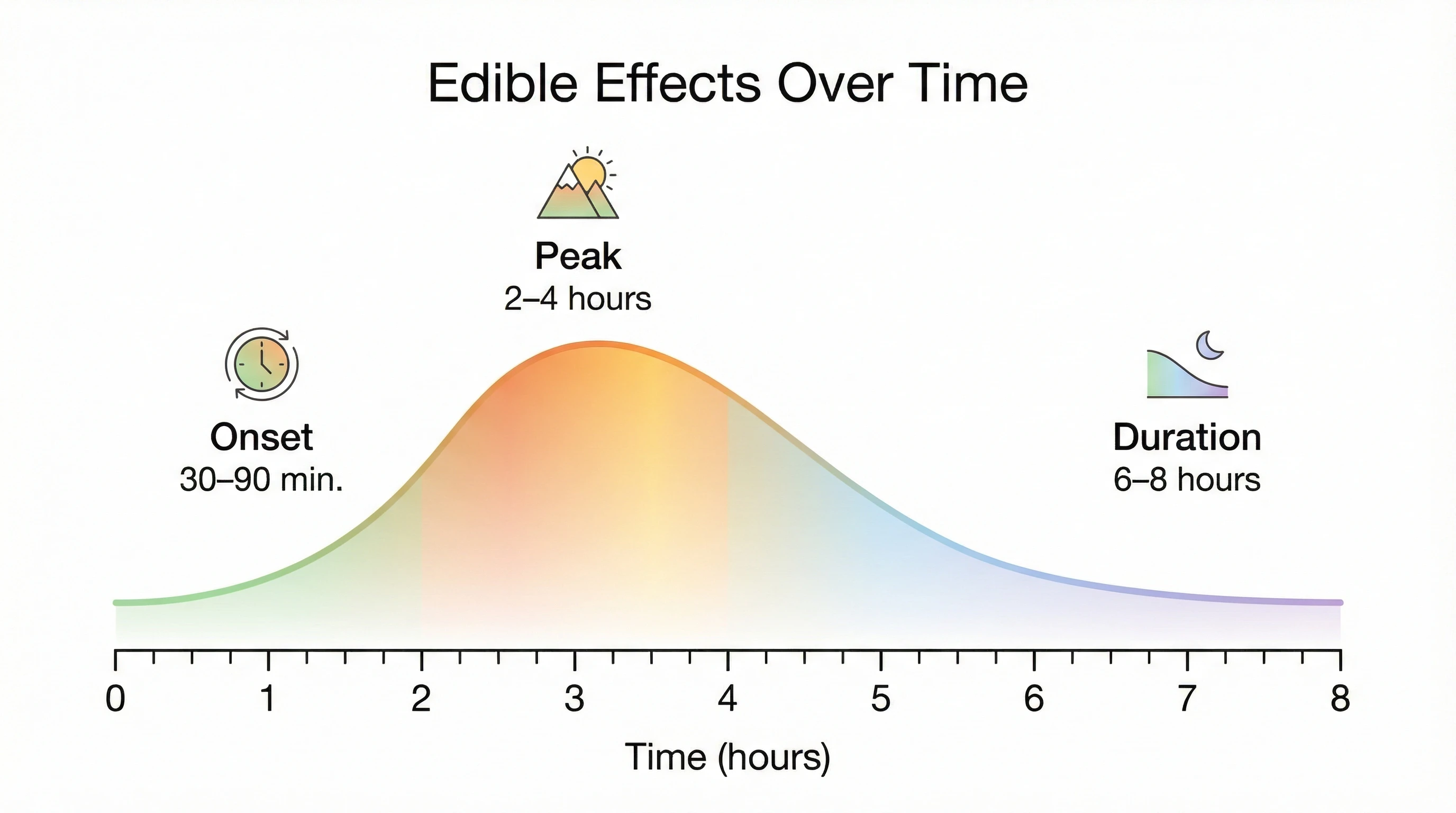
Why gummies feel riskier for anxiety
Cannabis gummies are not weak just because they look mild. Oral THC follows a different route through digestion, then metabolism. That route tends to increase variability and delays the peak effect compared with inhaled use.
Two practical consequences:
- You may not feel much at first, then feel a large effect later.
- Re-dose habits from smoking or vaping often do not work with gummies.
This is why many anxiety episodes linked to gummies are not about dose size alone; they are about timing.
What trusted sources say about timing and onset
- Health Canada notes oral cannabis effects can begin as soon as 30 minutes or as late as 3 to 4 hours, and suggests waiting at least 2 hours between single oral doses.
- Manitoba Health says edible effects can appear between 30 minutes and 2 hours, and can come on gradually over hours.
- Many regions apply strict edible serving frameworks, so checking the local label and product rules matters before use.
A safe rule is: wait longer than you think on first use, especially for anxiety.
A practical first-try framework
This draft does not provide an individualized dose; a qualified clinician or pharmacist should review product labeling, medicines, and personal risk.
- If that works without side effects, keep that dose for your baseline.
- Do not increase on the same day.
If no clear label exists, treat it as high uncertainty and avoid starting.
Step 2: Wait for onset windows
For anxiety, your goal is predictable response tracking. Use this wait schedule:
- Track effects at 60 minutes, 120 minutes, and 240 minutes.
- Do not re-dose in the first 2 hours for a first trial.
- Consider a re-dose only after a full symptom window and with the same product.
Step 3: Build a symptom log for 14 days
Record:
- Time taken
- THC label
- Anxiety score before, 2 hours, 4 hours, and next morning
- Sleep, appetite, and concentration
- Any red flags (panic, confusion, chest pressure, unusual agitation)
Patterns over days are more useful than a single dramatic night.
Red flags and what to do immediately
Seek urgent care if any of these happens:
- Chest pain or severe shortness of breath
- Confusion, paranoia, or seeing things that are not real
- Repeated vomiting with severe dizziness
- Severe panic or faintness that does not pass quickly
For immediate triage, remove yourself from driving, hydrate, use grounding breaths, and avoid additional cannabis.
If a child is involved, treat every ingestion as an emergency and get same-day care.
Pediatric and household safety
Children and teens are a high-risk group because gummy shape and flavor can invite accidental intake. Pediatric sources repeatedly document sedation, agitation, fast heart rate, and breathing difficulty after accidental cannabis edible exposure.
Use a lockbox and keep products in original packaging where possible. Never store mixed candy near other food.
US, Canada, Germany context in one page
United States
Medline and Mayo references consistently emphasize that THC side effects can include anxiety, panic, dizziness, and impaired judgment, and that risk rises with higher dose.
Canada
Health Canada guidance supports individualized dosing with clinician input and highlights wide onset variation after oral intake.
Germany
German federal guidance describes cannabis medicines as prescription-controlled products in pharmacy pathways, and federal risk authorities provide additional warnings around cannabis-containing food products.
Frequently asked questions
If gummies make me worse first, can I stop and restart?
Yes. That pattern can happen when anxiety is present, dosing is too fast, or onset has been underestimated. Pause, reduce frequency, and retest with a lower dose after full recovery.
No. It is a practical conservative start for many people. Some may need lower. If side effects appear early, lower dose or stop use.
Are gummies better than oils for anxiety?
They are often more convenient, but not automatically safer. Oral timing is the variable that changes outcomes the most.
How do I avoid accidental overuse on weekends?
Use a single pre-logged plan: one product, one dose slot, one person to measure, one fixed check-in time. Do not rotate products in the same day.
Related reading
- General anxiety and cannabis - Core anxiety framework and safe escalation checks
- Cannabis edibles timing guide - Broader timeline guide for oral forms
- Beginner dosing guide log - Tracking template for anxiety patterns
- Cannabis overdose facts - What to do if someone has a poor reaction
- Cannabis at work - Safety and job-risk context