Cannabis Laws by State 2026: Practical Route-Planning Guide
Cannabis legal systems are built on regional legal architecture, not one national standard. For users, the practical problem is simple: the same possession amount or use scenario can be legal in one place and a violation in another.
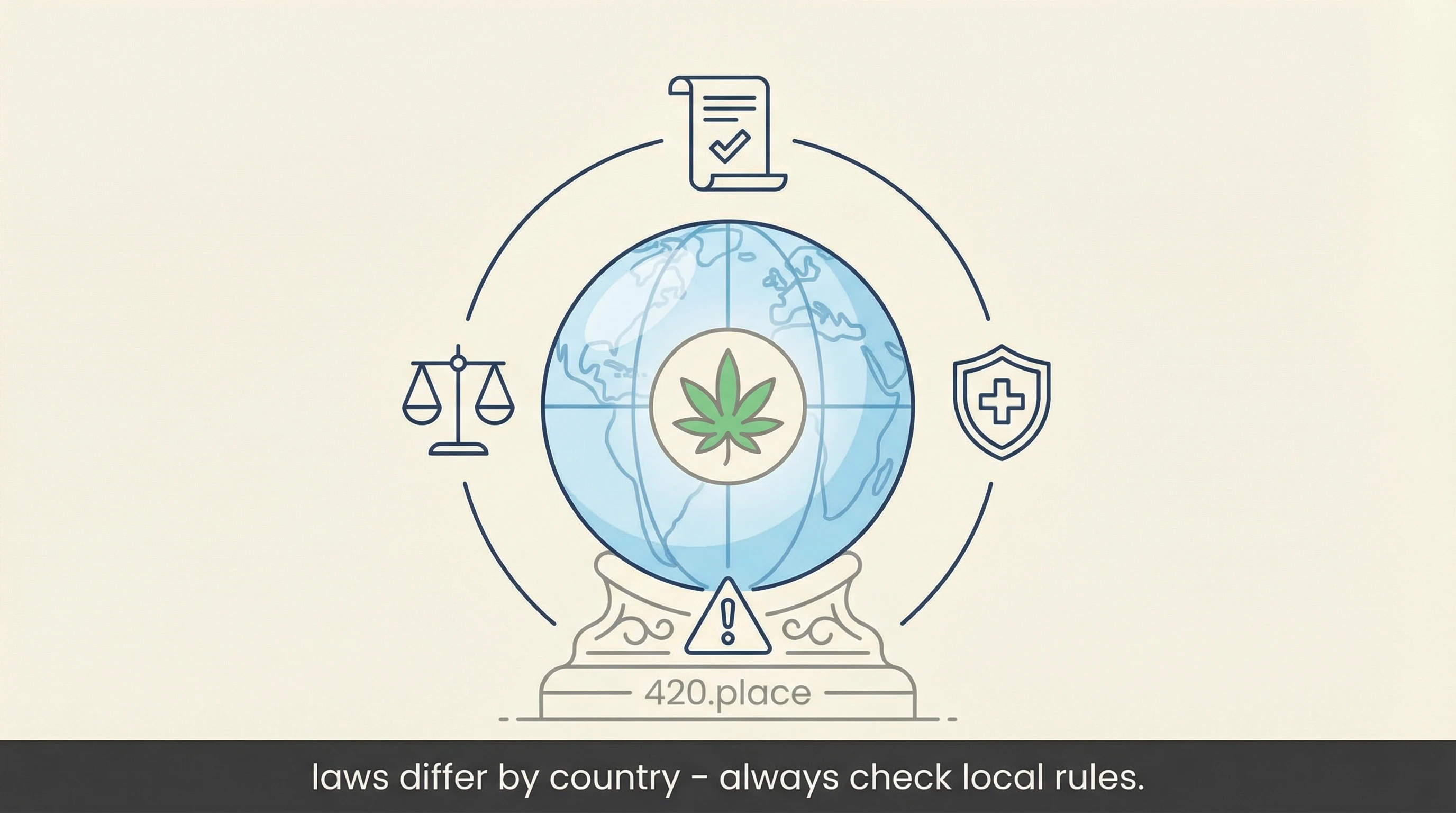
The right workflow is not memorization. It is a repeatable triage sequence that separates three questions first:
- Which law applies to this trip or interaction? 2. Which rule type applies: adult recreational, medical, workplace, or transport safety? 3. Which documents or identifiers do I need before acting?
Why state-level checks still matter in 2026
Most users underestimate how policy drift happens. A state that looked stable in previous months can update administrative thresholds, age requirements, and possession limits around budget or election cycles.
In practice, the highest-value habit is to assume rules are dynamic and treat every planning event as a fresh legal-state event:
- set a jurisdiction-specific pre-visit window,
- verify medical vs adult-use alignment,
- confirm possession/transport/storage thresholds,
- check workplace or school policy overlays before moving.
How to use this framework for US states
Treat each state as a matrix with these four columns:
| Layer | What to verify | Why it changes outcomes |
|---|---|---|
| Eligibility | Medical card access vs general adult-use access | Eligibility changes determine whether possession is lawful at all |
| Quantities | possession caps and delivery/transfer limits | Over- or under-thresholds can trigger escalating legal consequences |
| Public use boundaries | private vs public, workplace, school, and transportation rules | Same amount can be legal at home and risky in public or transit contexts |
| Documentation | patient cards, ID format, pharmacy records | Documentation mismatches create avoidable enforcement friction |
If one layer is uncertain, treat the scenario as noncompliant until confirmed.
Medical versus adult-use split is the core decision hinge
A common planning mistake is to assume medical access automatically overrides all other constraints. In many states, medical pathways reduce barriers but do not replace public-use, workplace, or transport restrictions.
A stable decision method:
- use one legal path per trip (medical only where medical pathway is primary),
- keep both ID and prescription docs where required,
- never mix travel assumptions from your home state with destination rules.
Quick state-level navigation logic
- If you are traveling with cannabis, verify destination possession and movement rules first.
- If you are a patient, verify renewal validity and access channel (clinic/portal/pharmacy) before departure.
- If you work in a strict industry, prioritize employer policy over permissive state text.
Germany and Canada: how to interpret without overgeneralizing
The query mix also touches Canada and Germany. Do not map Germany onto US state logic directly. Germany often applies prescription-led channels with different product, dosage, and medical review requirements.
Canada generally has federal medical frameworks that can differ in practical steps from US state programs. The same user profile can still face distinct access timelines and pharmacy logistics.
Use this simple sequence for international context:
- Identify whether your use is personal, medical, or travel-linked. 2. Verify official access channel in the destination country. 3. Confirm prescription/clinical documentation validity windows.
Priority actions before any jurisdiction change
- create a 7-day pre-move checklist,
- gather legal docs in a portable bundle,
- pre-check public-use and transport restrictions,
- test assumptions against official guidance one week before the event.
Common mistakes and what to do instead
- treating one legal page as evergreen: revisit dates and bulletin notices.
- assuming medical access implies public permissiveness: verify context-specific enforcement limits.
- relying on hearsay state-by-state summaries: cross-check official channels.
- ignoring workplace and travel edges: these often override local possession defaults.
Related links
- State legal map by US travel context - baseline travel comparison language
- Cannabis card overview - medical framework and jurisdiction categories
- Online card guidance - practical process steps for new applications
- Cannabis card renewal planning - continuity plan for recurring patients
- Cannabis legal risk detection guide - useful where legal risk involves testing thresholds
FAQ
Does medical access always override possession rules?
No. Medical programs usually define access and eligibility. They do not always override all possession or public-use restrictions.
Can I trust a state map from another site?
Use third-party maps only as a starting reference. Confirm high-impact assumptions from official channels before acting.
Is this legal advice?
No. This is an educational navigation guide. Verify legal specifics for your exact state and jurisdiction before decisions.