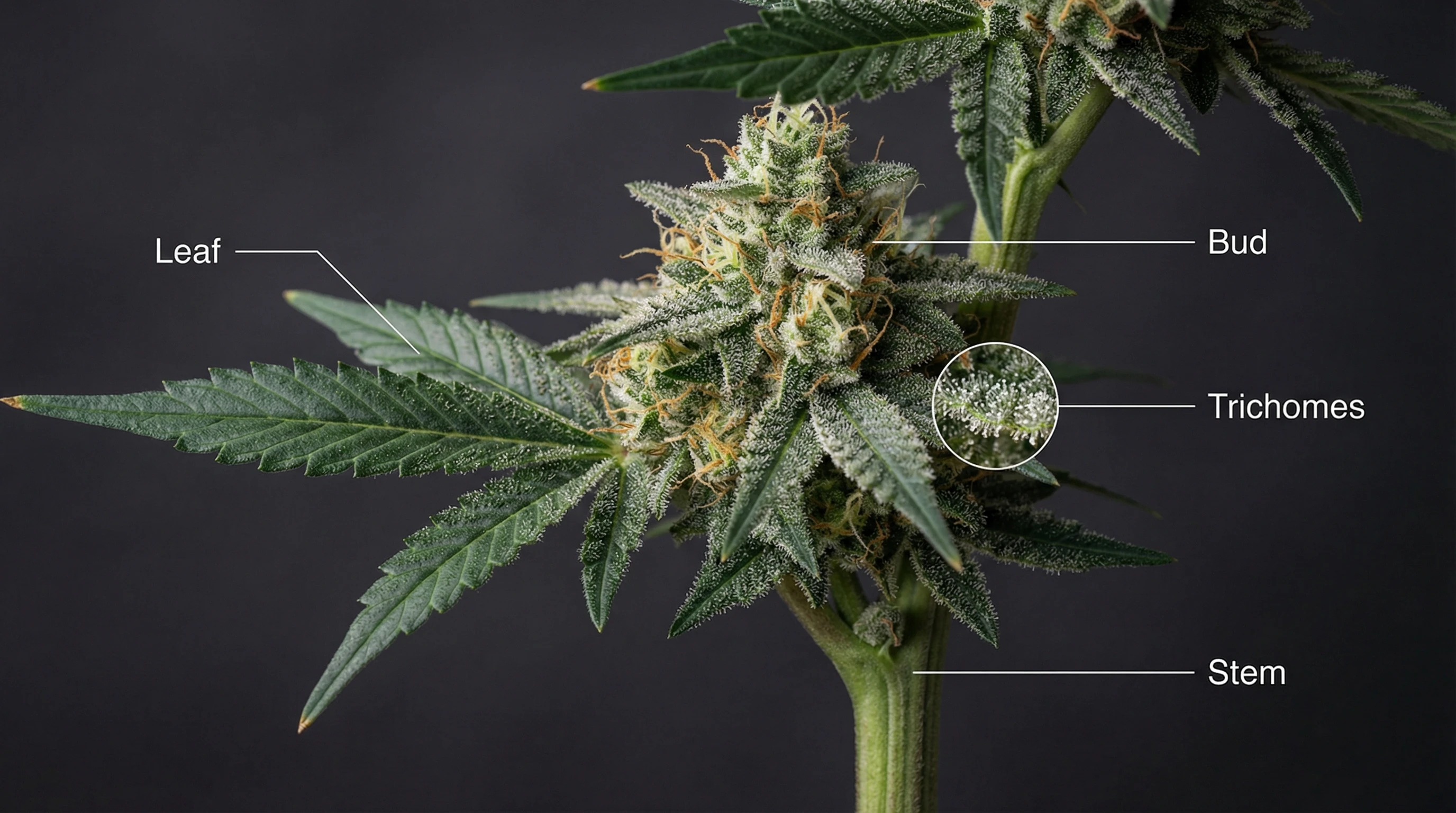
THC is short for delta-9-tetrahydrocannabinol, a cannabinoid that can produce intoxicating effects. It is one part of the cannabis plant's chemistry, not a complete description of a product or a person's response. The NIDA cannabis research hub summarizes current research on effects, use disorder, and areas of uncertainty. The CDC cannabis research page provides public-health context, while PubMed can be used to locate individual studies.
Why labels can confuse
Products may report THC as a percentage, milligrams per serving, or total milligrams in a package. Those numbers are not interchangeable without knowing the product format and serving definition. A label may also list THCA, which can be converted to THC when heated, alongside delta-9 THC. A COA and the batch label are more useful than a marketing phrase, but even a COA describes the tested sample and its method.
Effects and uncertainty
THC can affect perception, attention, coordination, memory, mood, and heart rate. The experience varies with route, product chemistry, prior exposure, health, other substances, and setting. Research findings may describe averages or associations rather than a guaranteed individual outcome. "Natural," "high potency," or a strain label does not establish safety or suitability.
Adults over 50 should discuss cannabis with a clinician or pharmacist if they take prescription medicines, have balance or cardiovascular concerns, or have a history of mental-health complications. Avoid combining substances when the interaction is unknown and do not drive while impaired. This guide does not provide a dose, titration schedule, or treatment recommendation.
Questions worth asking
What exactly does the package measure? Is the batch and test date visible? Does the product contain other cannabinoids? What evidence supports the advertised benefit? What local rules apply? These questions help separate a chemical description from a health claim. If a symptom or reaction is severe, seek medical help rather than treating this explainer as a diagnosis. A clear label can answer what a product contains; it cannot predict how a particular person will respond. The safest reading habit is to separate chemistry, evidence, and personal medical advice instead of treating them as interchangeable.
A useful way to read a THC claim
First identify whether the number is a percentage, an amount per serving, or an amount for the whole package. Then check the batch, test date, laboratory method, and whether THCA and delta-9 THC are reported separately. A potency figure describes chemistry; it does not guarantee intensity, benefit, or safety for an individual. Use the Responsible Use guide for impairment, storage, driving, and substance-mixing boundaries. Medication, cardiovascular, balance, or mental-health concerns belong in a clinician or pharmacist conversation, not a product comparison. This page intentionally avoids consumer dosing. Save the primary-source link and date checked so future editors can update the explanation without carrying forward an outdated statistic.