Australia Cannabis Edibles 2026: Legal Access and Safe Timing
Australians ask this often: is using edible cannabis different from smoking? The answer is yes, mostly in timing and legal oversight.
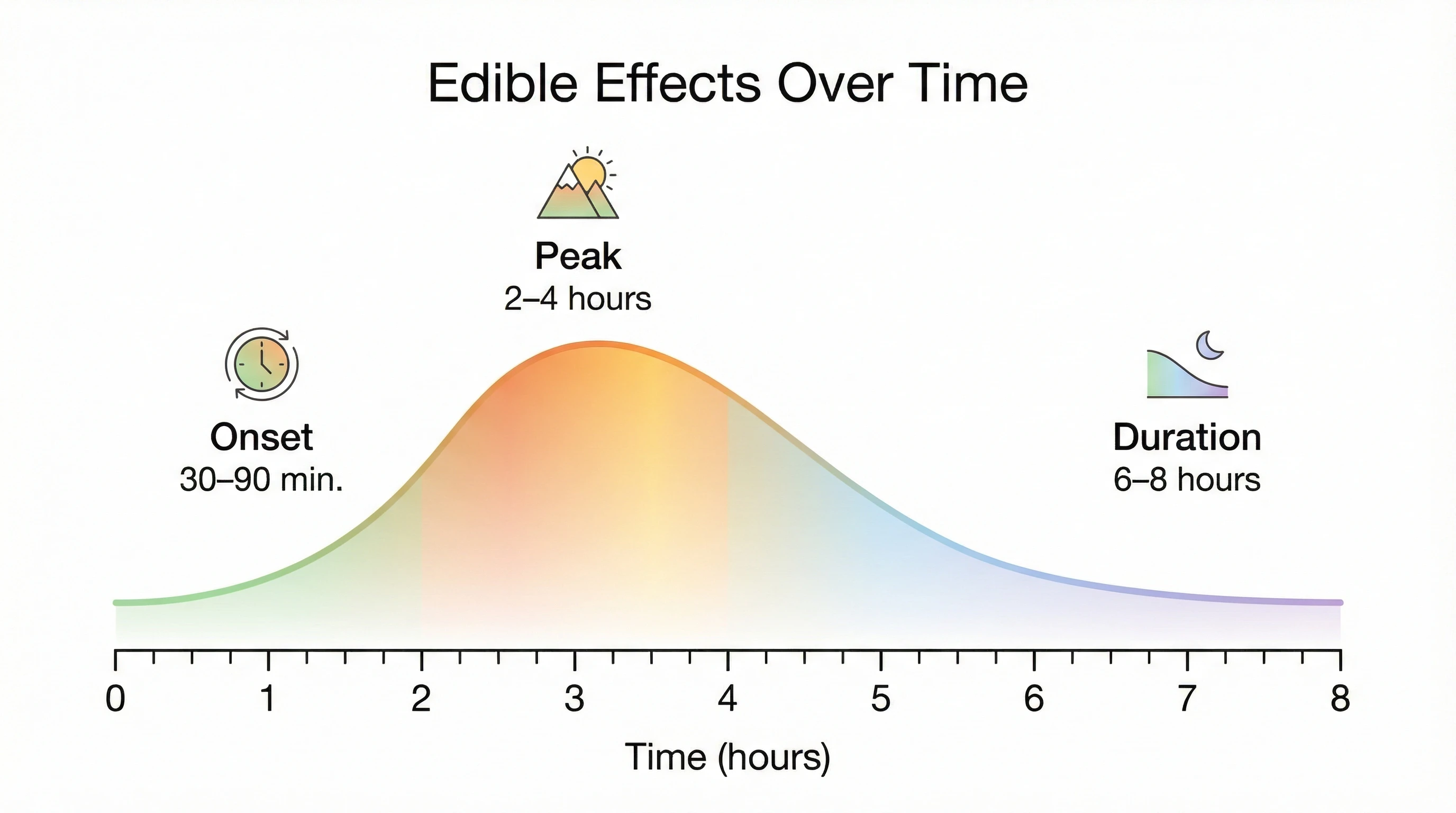
Edibles can work in settings where smoking is not ideal. But they need strict timing discipline and clear legal expectations.
Australia legal access pattern in simple terms
Queensland's official health guidance explains that medicinal cannabis access is restricted to appropriate patients and linked to medical conditions where evidence supports use.
In practice, this means:
- access is not a general consumer store model,
- a treating doctor is central,
- and prescribing decisions are handled through formal pathways overseen by the TGA system.
For patients in Queensland, doctors can prescribe medicinal cannabis products within those legal pathways.
Australia's legal structure can still feel confusing because drug laws are implemented through shared Commonwealth and state systems.
If you travel, use country-specific rules only. One region's medical paperwork does not automatically apply in another country.
Why edibles feel delayed and sometimes stronger later
With edibles, cannabis is absorbed through the digestive process first.
That is why onset is usually slower than smoked or vaporized routes.
In practical terms:
- onset commonly starts around 30 to 90 minutes,
- peak can happen around 2 to 4 hours,
- effects can continue 6 to 8 hours or longer for some people.
This delay creates the biggest risk: people redose too early.
A useful mental model is simple:
- treat each edible as a medical trial,
- wait for a full early response window,
- then only reassess after measurable change.
A safe start framework for 2026 users
Use the smallest clear dose first.
For many first-time users, a low starting range helps reduce spikes, anxiety, and next-day fatigue.
2) Log everything
Write down for each session:
- exact time,
- product form,
- labelled mg amount,
- mood before use,
- dose taken,
- next dose timing.
A simple log is more useful than memory.
3) Keep the minimum 2-hour wait
A reliable rule is to wait at least 2 hours before deciding whether to redose.
If you add the same dose too early, edible effects can stack and become harder to calm quickly.
4) Keep products in original, labeled container
If the product is unlabeled, split into unknown portions, or difficult to identify, you increase confusion.
For families, this can become a safety risk, especially with children and visitors.
Child and household safety in Australia
If a home has children or pets, treat edible products as high-risk materials.
- use original child-resistant packaging,
- store above eye level in a locked place,
- keep a list of labels with contact numbers near the medicine area,
- never store in food drawers or snack bags.
If accidental ingestion happens, seek medical support right away.
What is different across countries
United States
US search patterns usually compare state rules, card status, testing, and employer or workplace implications.
Users in US states with different legal status can see very different product and possession rules.
Canada and Germany quick compare
Canada and Germany are known for medical frameworks based on clinician authorization and strict documentation standards.
Germany is generally prescription-driven in medical settings.
Canada's system is also structured around medical pathways and licensing.
The practical takeaway is the same: do not assume an Australian pathway maps directly to another country.
When effects feel too strong or last too long
Common signs of overconsumption include
- anxiety or panic,
- confusion,
- persistent dry mouth,
- racing heartbeat,
- severe nausea,
- poor sleep.
If the reaction is severe, get help immediately.
Common questions people search today
Can I use any edible product in Australia?
No. Australia-style medical access is usually tied to a regulated pathway, and products should be checked against current medical guidance.
Is edibles onset always 30 minutes?
No. A full stomach, body size, and metabolism can shift timing.
The practical rule stays the same: no redose before a full 2-hour observation window.
Does CBD-only mean no anxiety?
Some users report fewer "high-like" sensations, but every person and product mix behaves differently.
Is child exposure risk mostly a legal issue?
No, it is a safety issue first. Child exposure can cause serious medical events.