Police Cannabis Testing 2026: What to Do and What It Means
If your search includes "cannabis blood test police", you are usually looking for practical clarity right away.
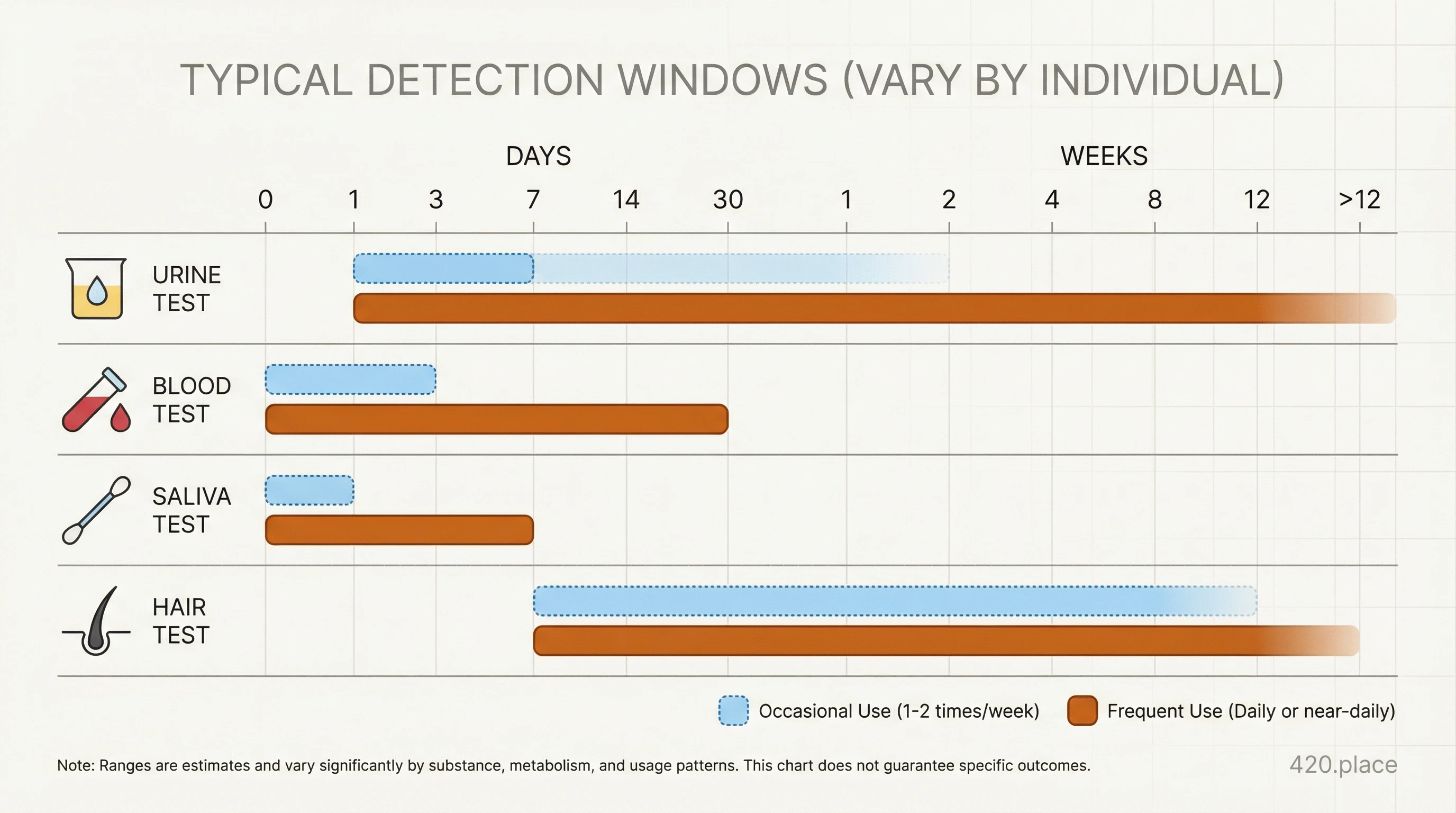
A police test result is often one data point in a legal process, not a final conclusion by itself.
Why results feel confusing across systems
Different tests can be used for different purposes:
- roadside or field screening,
- confirmatory follow-up,
- and case-specific documentation.
That is why two people can receive different outcomes from similar use histories.
What usually happens first
Many enforcement routes begin with a short sequence:
- identity and safety check,
- method request,
- observation and documentation,
- possible transport for a follow-up sample or legal intake.
This still varies by region, and there is no single global standard.
Test type and action value at a glance
| Test type | Common police workflow use | Important interpretation note |
|---|---|---|
| Saliva / oral fluid | Rapid roadside screening and triage | A screening line is usually an early alert, not final proof |
| Blood | Confirmatory or time-sensitive investigative pathways | Interpretation depends on timing, cutoff, and chain-of-custody context |
| Urine | Program-specific monitoring contexts | Useful for exposure pattern, less direct for immediate impairment timing |
A safer interpretation starts with method, collection timing, and whether results are screening or confirmatory.
Practical actions in the first 60 minutes
- Stay calm and follow lawful instructions.
- Record the exact request: test type, start time, and officer case reference.
- Keep your own timeline: last use, dose route, sleep, alcohol or medicine use.
- Avoid speculation and reactivity during the initial exchange.
- After testing, avoid high-risk tasks until a clinician or legal reviewer confirms your status.
This checklist is for risk reduction, not legal strategy.
US, Canada, and Germany pattern differences
United States
US systems differ by jurisdiction and procedure track. In practice, roadside logic, court pathway, and workplace impacts can all shape what happens next.
Canada
Canada uses public-health and enforcement pathways that can differ by province and case type. Roadside triage often connects to further review and formal process.
Germany
Germany uses statutory thresholds and formal documentation in traffic and law-enforcement contexts. The recorded method and timing are central to what a result can support.
If results appear delayed or unclear
- request the exact method and report status,
- confirm whether a screening or confirmatory step was used,
- request official follow-up timing,
- preserve your own timeline notes and avoid changing medication or dosing based on one result.
When consequences involve work, health, or travel, this is a case for documented review, not impulse action.
FAQ
Can I assume blood tests are always stronger than oral fluid?
Blood may be preferred in some high-stakes workflows, but it still depends on context and timing.
Is a positive screening result final?
Usually not. Screening often starts a chain that may include confirmation before major legal decisions.
Why do the same situations get different outcomes?
Method choice, timing, jurisdiction, and legal thresholds can all change interpretation.
Should I drive after a police cannabis test?
If results or symptoms are uncertain, avoid driving and follow lawful transport and follow-up instructions.
Does this replace legal advice?
No. It is educational only. Legal counsel is required for case-specific rights and strategy.